Patient information
Recovering from knee replacement
After a knee replacement, walking less in the first weeks helps you recover. Walking increases swelling, and swelling stops your knee bending and straightening fully, so Dr Connon sets a maximum daily step count that rises week by week. Combined with ice, elevation and a few simple exercises, this aims for a knee that hurts less and bends better.
Can I overdo walking after a knee replacement?
Yes. Surgeons used to encourage people to push their knee as hard as possible early on. Research has shown parts of that approach can be counter-productive, because of the effect on swelling. [1, 2]
Getting your knee bending and straightening well is still important, and that’s exactly why you need to walk less, not more, in the early weeks. Walking increases swelling, and swelling limits movement. Keeping your step count down also noticeably reduces pain. You’ll still have some swelling for months; the aim is to keep it as low as possible to give you the best range of movement in the long term.
Your daily step limit
| Week after surgery | Maximum steps per day |
|---|---|
| Week 1 | 750 |
| Week 2 | 1,500 |
| Week 3 | 2,250 |
| Week 4 | 3,000 |
| Week 5 | 3,750 |
| Week 6 | 4,500 |
These are maximums, not targets. It’s important your knee bends and straightens well before you start walking longer distances.
Six exercises for the first six weeks
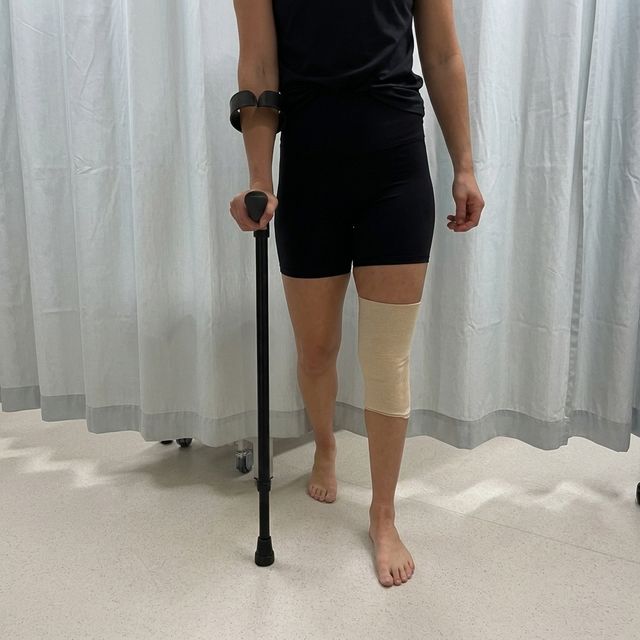
- Short walks. Every waking hour, take a short walk of at least 5 to 10 steps, such as down the hallway and back, to keep blood flowing.
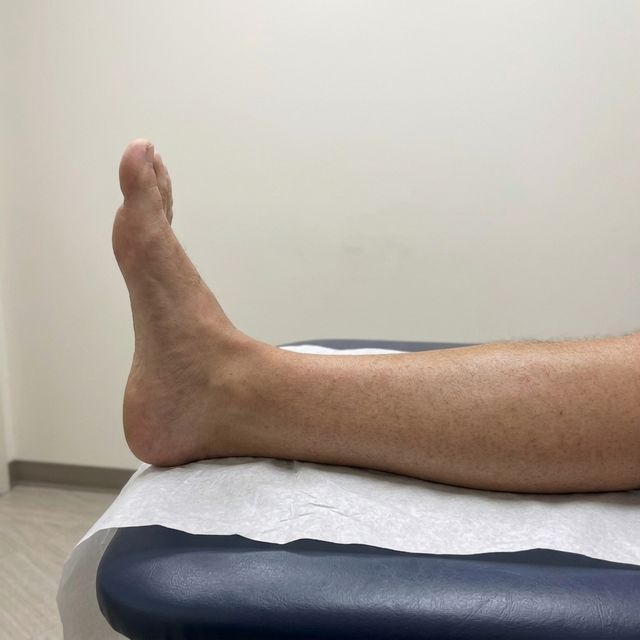
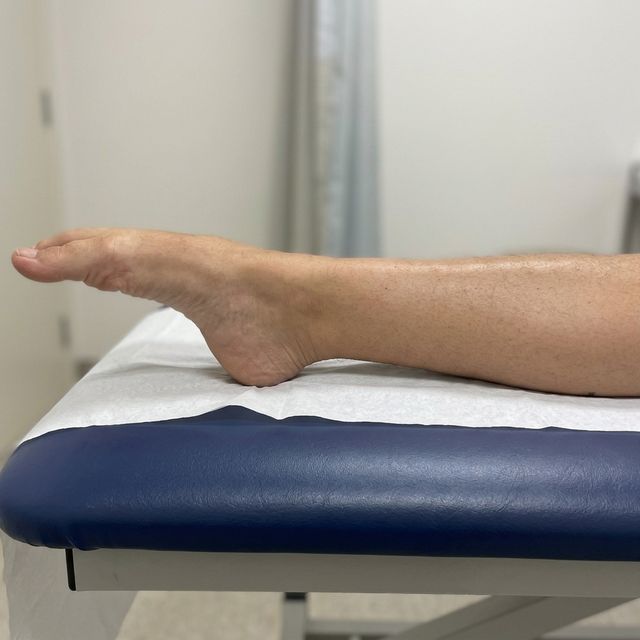
- Ankle pumps. Every hour while sitting or lying: move your feet up and down 20 times, holding the pointed-toe position for 3 seconds. Keep your legs still on the bed.
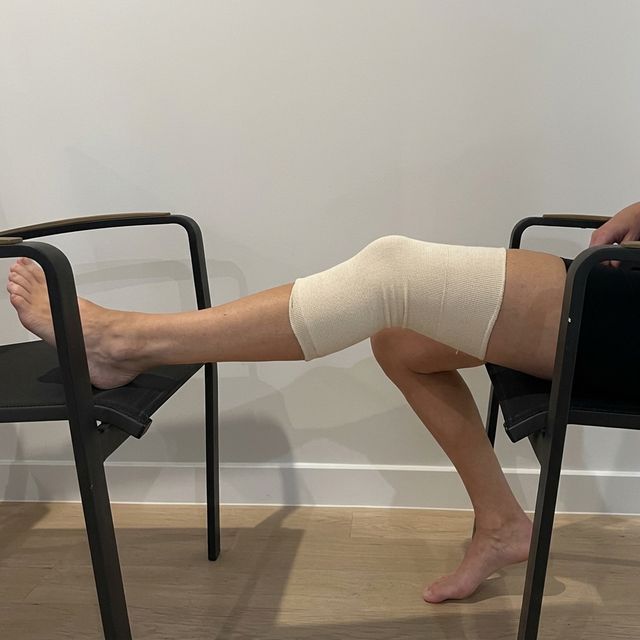
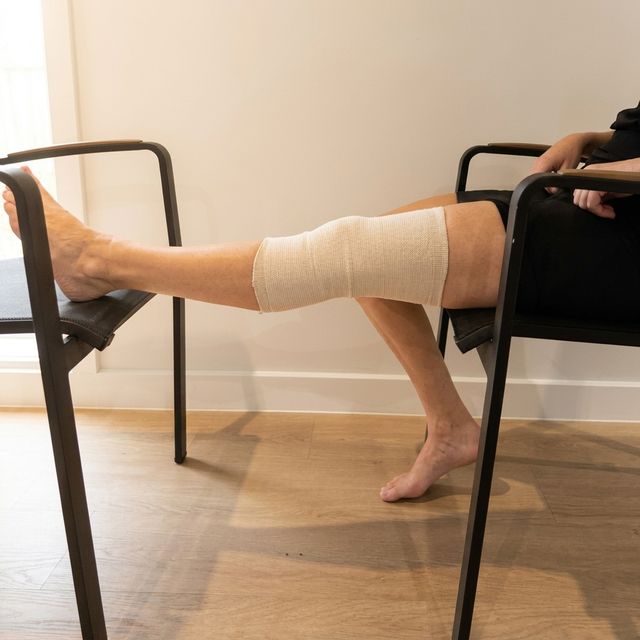
- Heel hangs. Sit upright with the heel of your operated leg on a stool or table and let gravity straighten your knee. Hold 30 to 40 seconds, 3 times, every 3 waking hours.
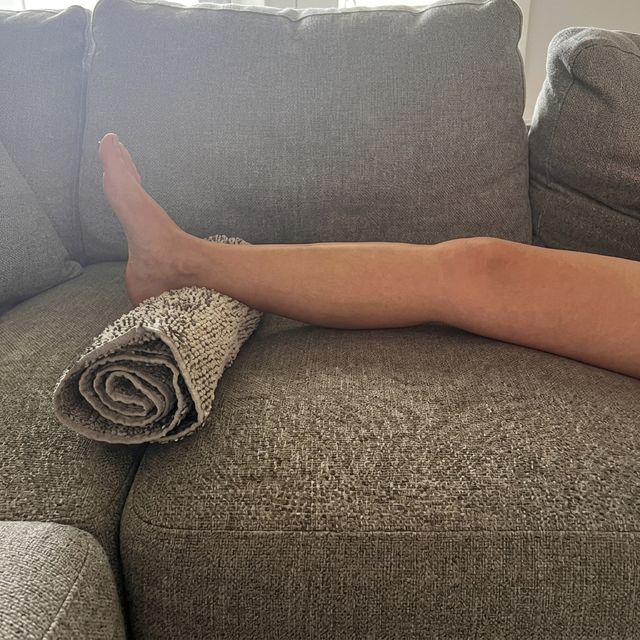
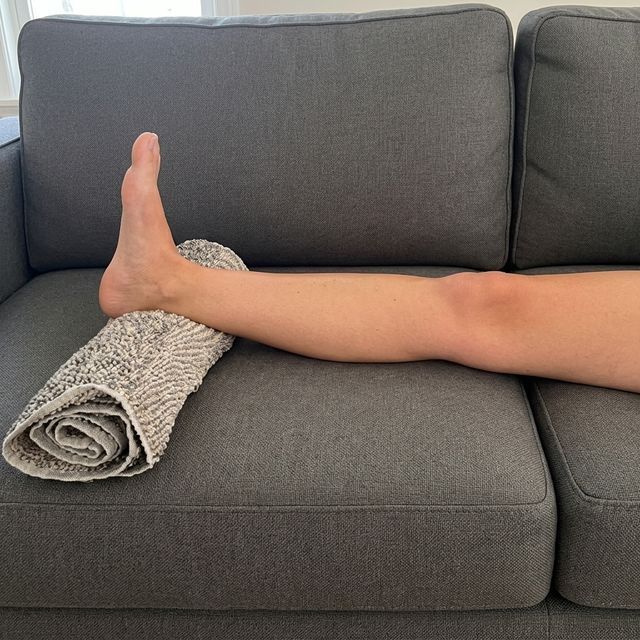
- Active knee straightening. Lying on your back with a rolled towel under your heel, tighten your thigh muscles to push the back of your knee towards the bed. Hold 3 seconds, 3 times, every 3 waking hours.
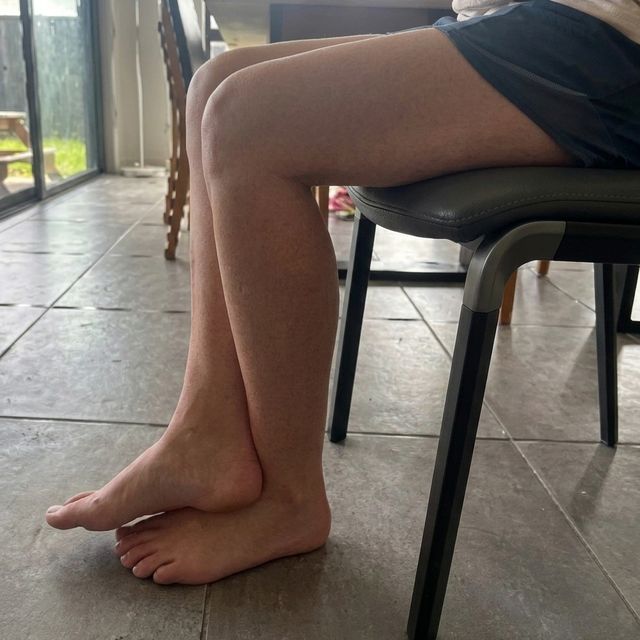
- Assisted knee bending. Sitting in a chair, bend your operated knee back as far as you can, then use your other ankle to push it a little further. Sliding your bottom forward increases the stretch. Hold 3 seconds, 3 times, every 3 waking hours.
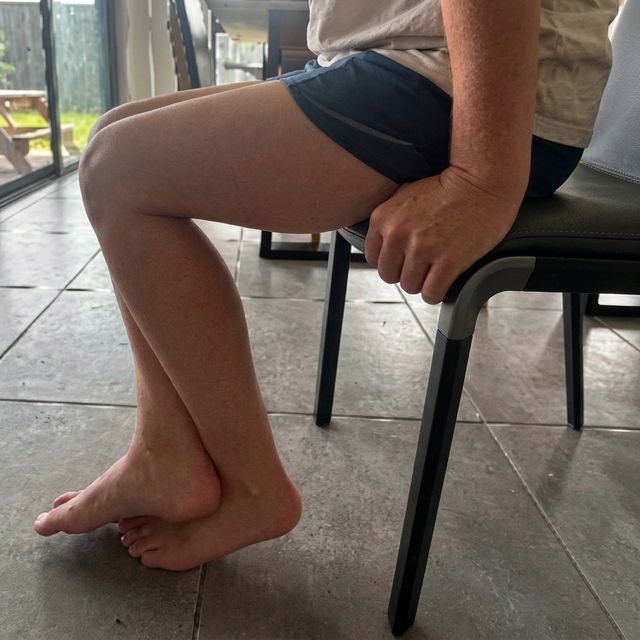
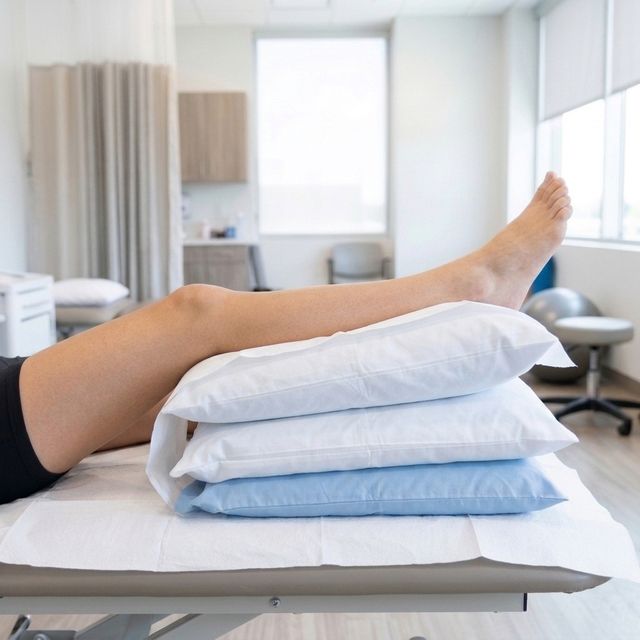
- Elevation. Several times a day, rest for 30 to 40 minutes with your lower leg on 3 or 4 stacked pillows, knee supported and above the level of your heart. You can use an ice pack at the same time.


Follow any specific instructions your physiotherapist or Dr Connon gives you.
Pain relief, ice and elevation
Knee replacements are sore for a few weeks, even with modern techniques. Pain can be reduced:
- The basics first: ice, elevation (“toes above nose”) and keeping within your step limit. These reduce how many painkillers you need.
- Paracetamol, with or without anti-inflammatories, taken regularly, unless you’ve been told not to.
- Stronger painkillers. Unless you were taking opioid painkillers before your operation, you usually won’t need them regularly afterwards. In hospital they’re charted on an as-needed basis, so they’re available if you need them. Side effects include nausea, constipation, light-headedness and dependence, so use them only when needed.
For the first week, rest with your knee slightly bent to reduce swelling, but still practise straightening it every day. Also spend time each day sitting in a chair with your knee fully bent.
Wound care
Leave your water-resistant dressing in place until your wound check with our nurse practitioner at 2 to 3 weeks. Please don’t lift it to look, as that increases the risk of infection. Shower, but don’t bathe or swim until you’ve been told the wound has healed. A numb patch on the outer side of the scar is normal.
Driving, swimming and physiotherapy
- Crutches: use two crutches, one in each arm, for the first 2 weeks. Then use one crutch for the next 2 weeks, held on the side opposite your operated knee.
- Blood-thinning medicine: aspirin 100 mg once a day for 4 weeks is usual, but this is individualised: follow the instructions you are given.
- Driving: once you’re off opioid painkillers. Usually about 2 weeks for a left knee (automatic car) and up to 4 weeks for a right. Discuss it at your wound check at 2 to 3 weeks. [3]
- Swimming and hydrotherapy: about 4 weeks, once the wound has healed.
- Physiotherapy: reconnect with your community physiotherapist 2 to 4 weeks after you go home. Don’t overdo exercise in the first 2 to 4 weeks: it can set you back by causing more swelling.
- Review with Dr Connon at 6 to 8 weeks, with an X-ray beforehand.
When to call us
Call our rooms on 07 5413 4300 straight away if you notice:
- new ooze through the dressing, or water getting under it
- a fever
- pain that suddenly gets worse
- painful swelling in your calf, which can be a sign of a blood clot
Sudden shortness of breath or chest pain is an emergency: call 000.
If you’re concerned outside office hours, go to your nearest emergency department. The emergency team can contact Dr Connon through the hospital switchboard.
Common questions
How many steps should I walk after a knee replacement?
After a total knee replacement through the subvastus approach, your maximum is 750 steps a day in week 1, rising by 750 each week to 4,500 a day in week 6. These are maximums, not targets. The limit is higher after a partial knee replacement; follow the guide you’re given.
How long will my knee be swollen after a knee replacement?
You’ll have some swelling for months. Keeping within your step limit, ice and elevation keep it as low as possible, which helps your knee bend and straighten fully in the long term.
When can I drive after a knee replacement?
Once you’re off opioid painkillers. That’s usually about 2 weeks for a left knee if you drive an automatic, and up to 4 weeks for a right knee. Discuss it at your wound check at 2 to 3 weeks.
When should I start physiotherapy after a knee replacement?
Reconnect with your community physiotherapist 2 to 4 weeks after you go home. Until then, do the six exercises on this page and don’t overdo exercise, which can set you back by causing more swelling.
When will I see Dr Connon after my knee replacement?
Your wound check with our nurse practitioner is at 2 to 3 weeks, and your review with Dr Connon is at 6 to 8 weeks, with an X-ray beforehand.
References
- Bade MJ, Struessel T, Dayton M, et al. Early high-intensity versus low-intensity rehabilitation after total knee arthroplasty: a randomized controlled trial. Arthritis Care Res (Hoboken). 2017;69(9):1360–1368. doi:10.1002/acr.23139
- Holm B, Kristensen MT, Bencke J, et al. Loss of knee-extension strength is related to knee swelling after total knee arthroplasty. Arch Phys Med Rehabil. 2010;91(11):1770–1776. doi:10.1016/j.apmr.2010.07.229
- Dalury DF, Tucker KK, Kelley TC. When can I drive?: brake response times after contemporary total knee arthroplasty. Clin Orthop Relat Res. 2011;469(1):82–86. doi:10.1007/s11999-010-1507-1
This page is general information based on Dr Frank Connon’s patient information. It isn’t a substitute for advice about your own situation. All surgery carries risks, and outcomes vary between people.
Related
Knee replacement
Total and partial knee replacement with Dr Frank Connon using the quadriceps-sparing “subvastus” approach: suitability, planning, recovery, risks, costs.
About knee replacementPreparing for hip or knee replacement
Your appointments before joint replacement, Joint School, medicines, the 2 weeks before surgery, fasting and Sip Til Send, and what to pack for hospital.
How to prepareContact us
Call 07 5413 4300 to book with Dr Frank Connon. Rooms in Noosaville and Birtinya. Fax 07 5238 8022. Office hours Monday to Friday, 9am to 4.30pm.
Contact detailsAfter your surgery
Questions about your recovery?
If you’re not sure whether something is normal, call our rooms. We’d rather hear from you early. Outside office hours, go to your nearest emergency department. In an emergency, call 000.
- Phone
- 07 5413 4300
- Fax
- 07 5238 8022
- Office hours
- Monday to Friday, 9am to 4.30pm
Closed on public holidays. We aim to return voicemails the same business day.